

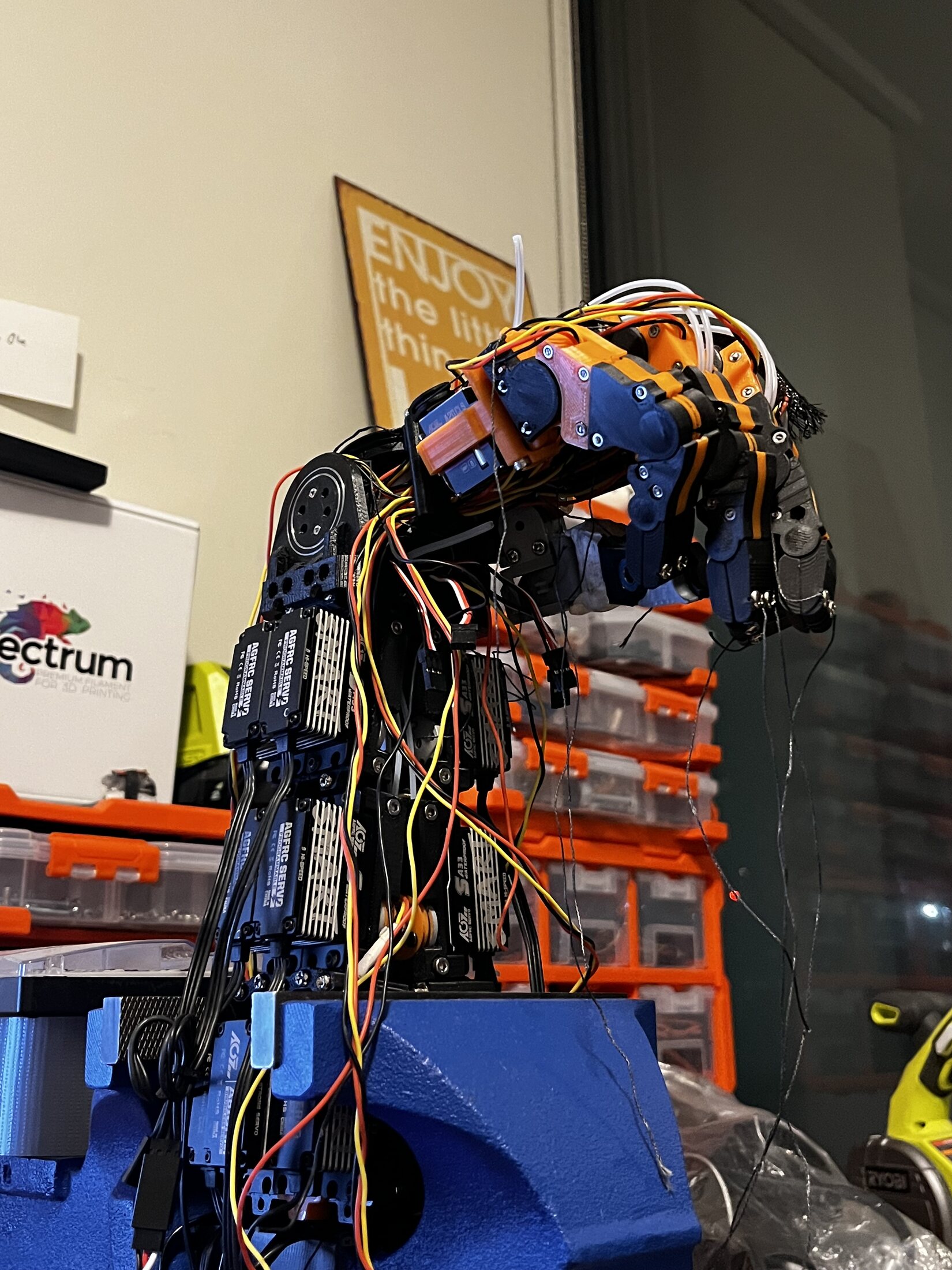
Could I build a useful tendon-driven hand without expensive hardware? I worked it through with CAD, printed mechanisms, tendon routing, servo control, and a lot of physical testing. It later branched into Sixth Sense and Hand Tracking.
Mechanism and development
I put the actuators in the forearm and ran a separate tendon to each finger through printed guides and pulleys. A geared stage handled wrist rotation. I rebuilt the fingers, tendon paths, and controls several times as the physical tests exposed friction, slack, and assembly problems.
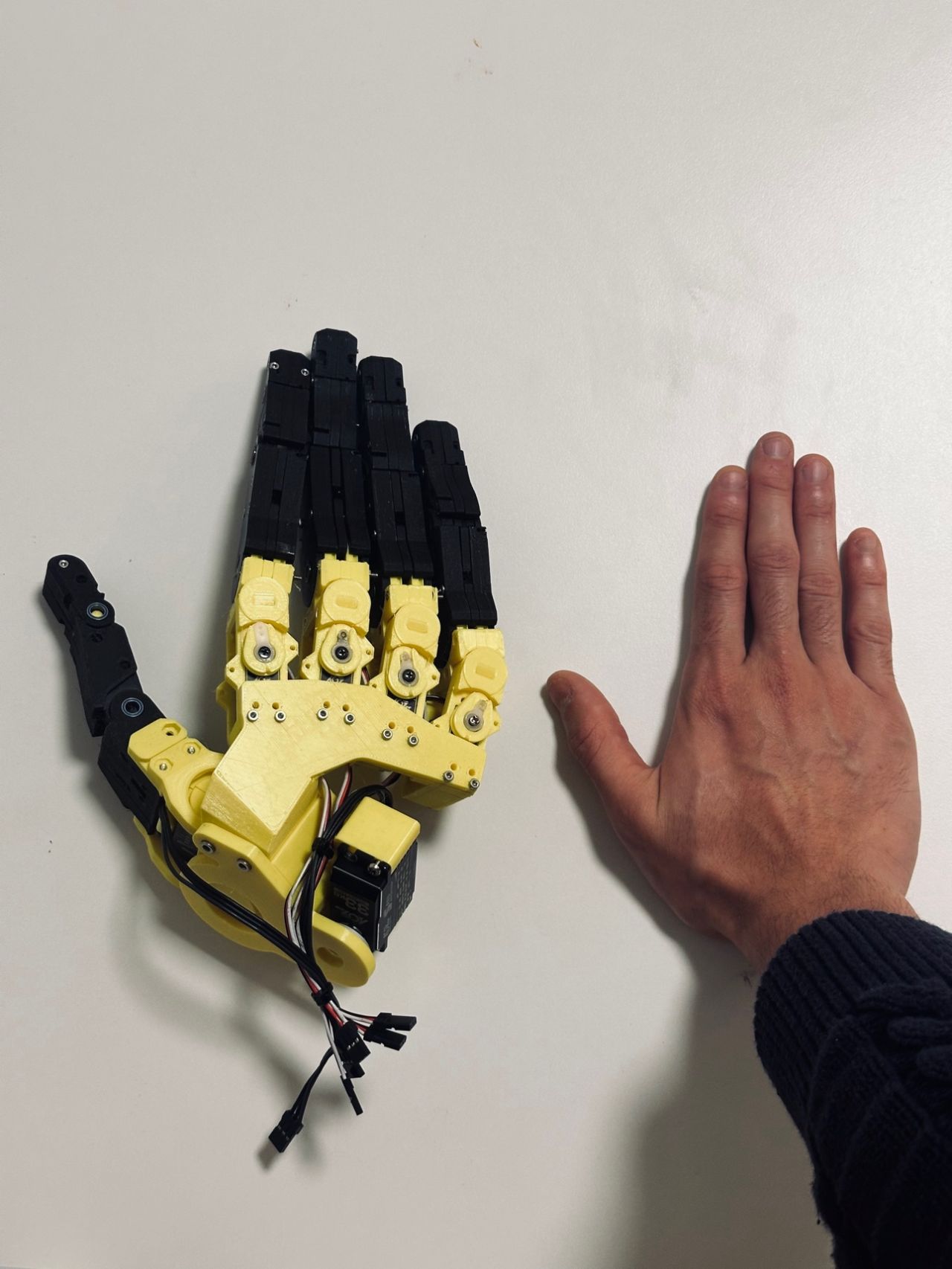
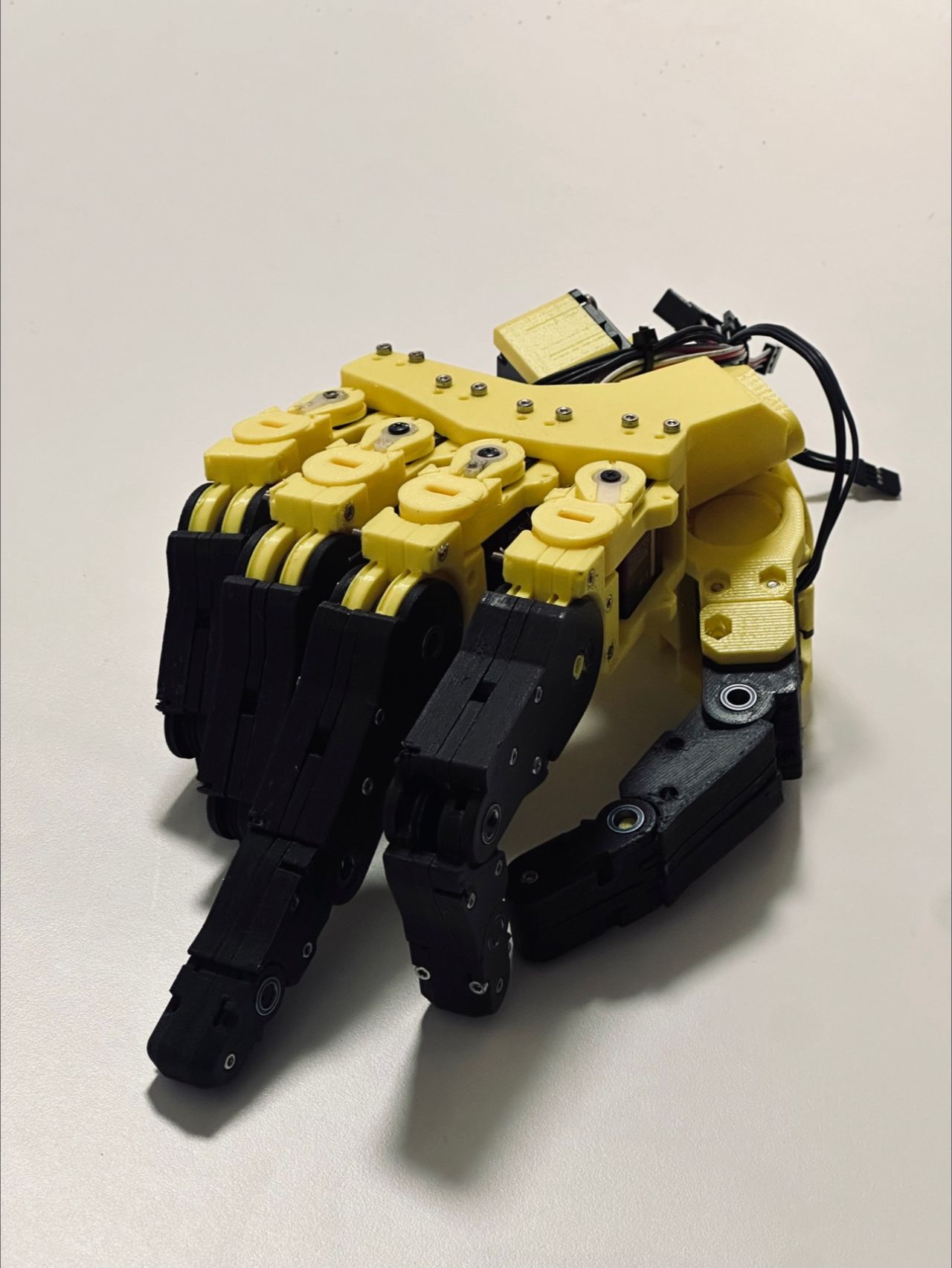
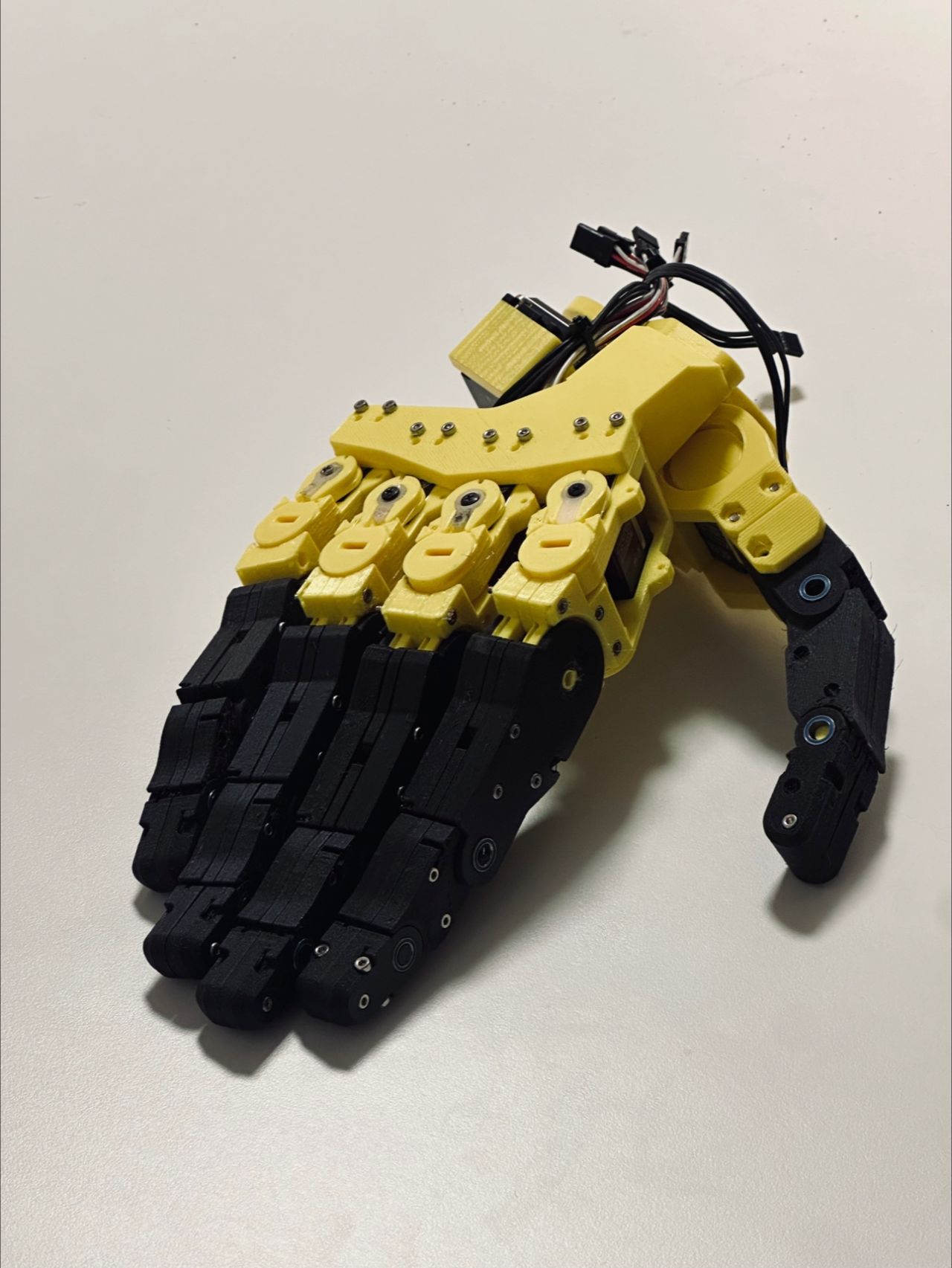
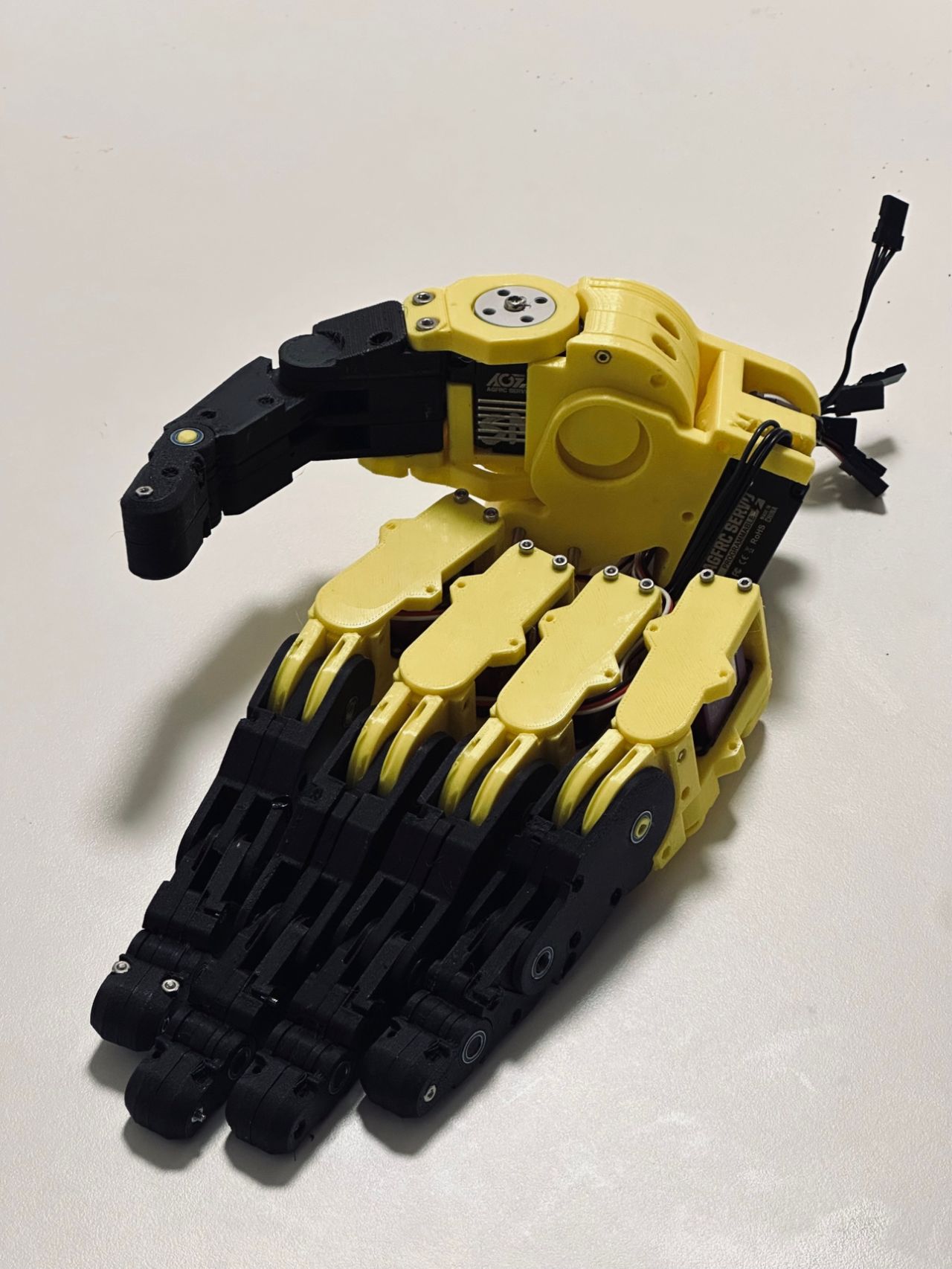
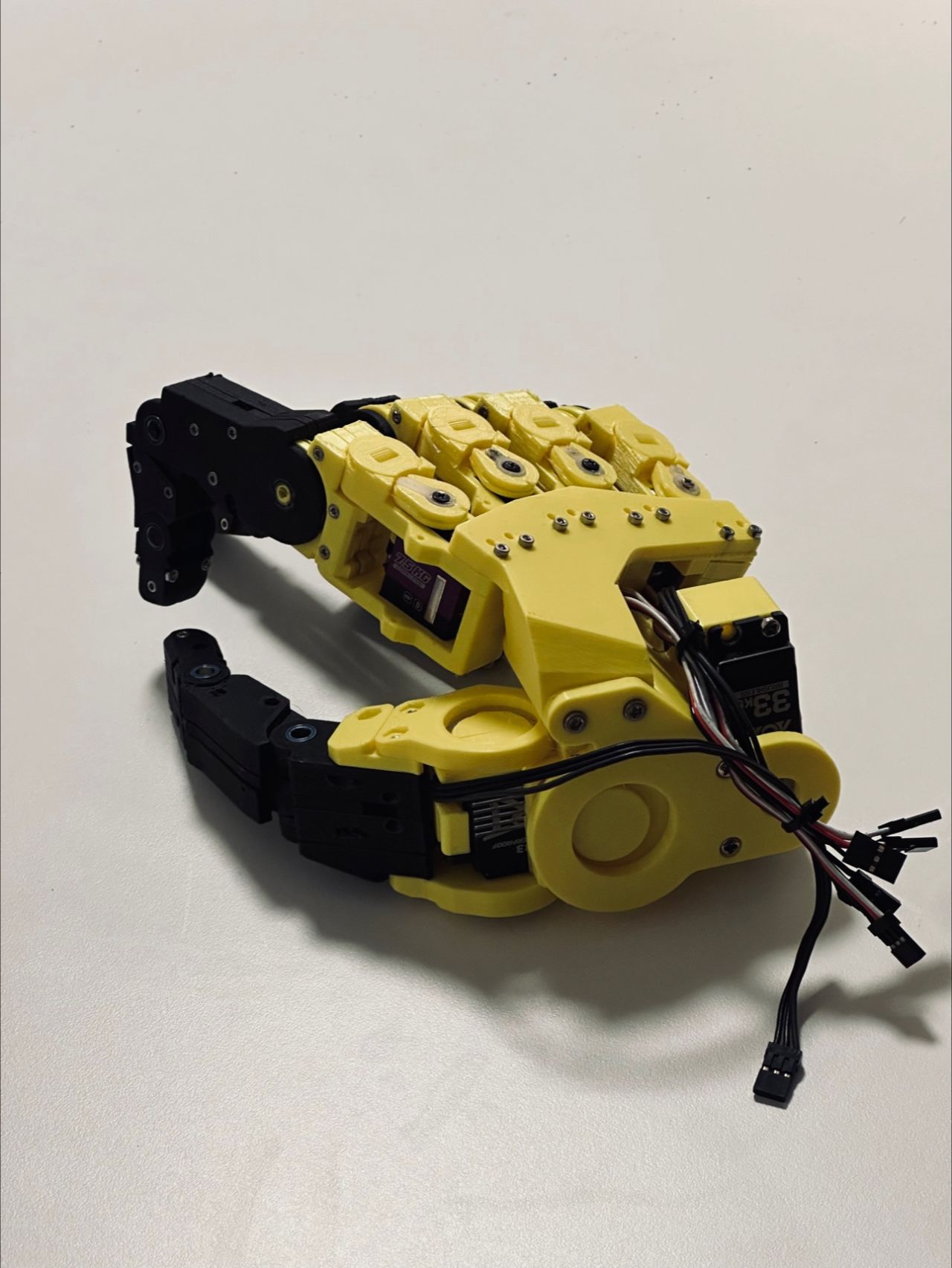
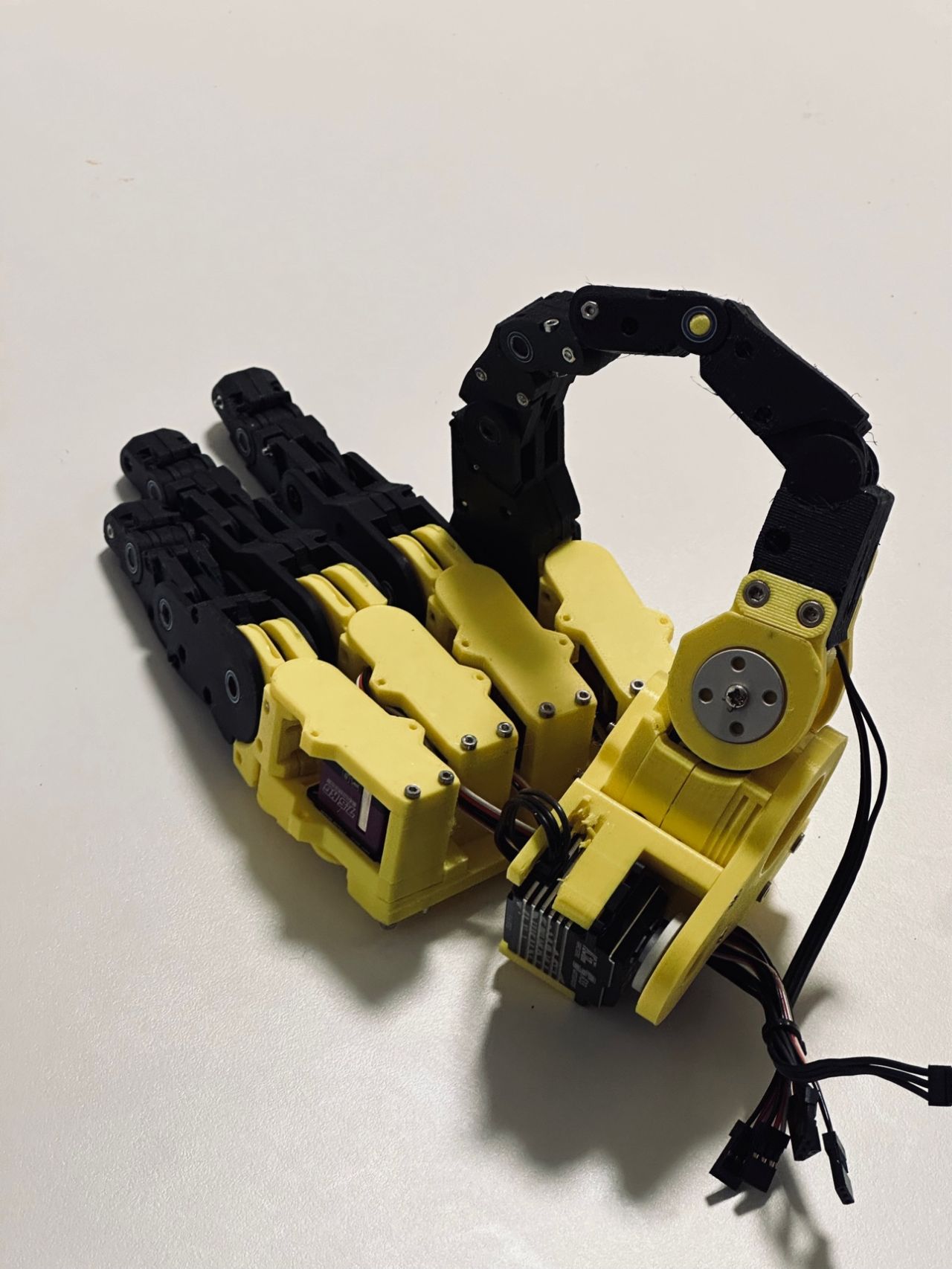
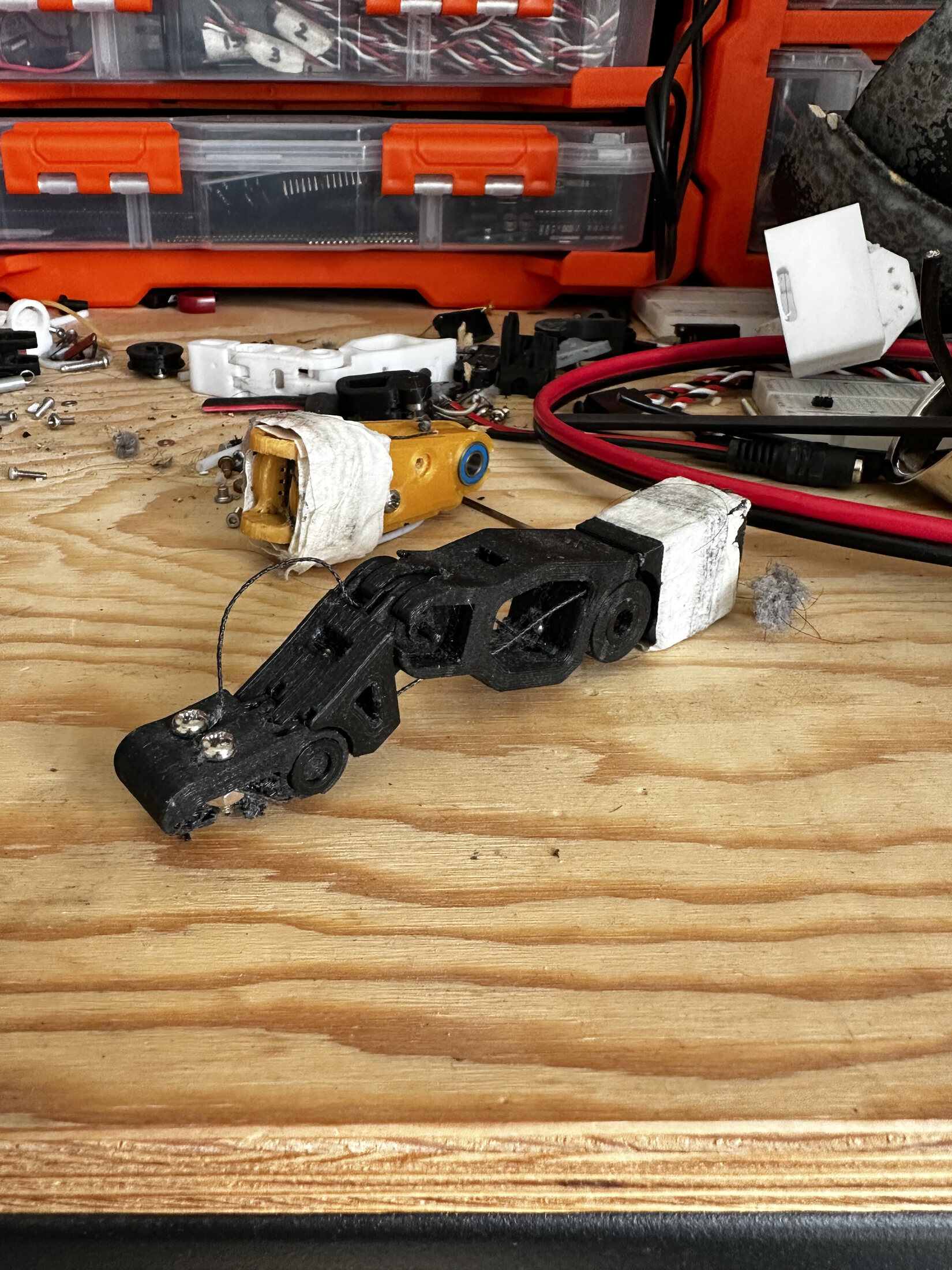
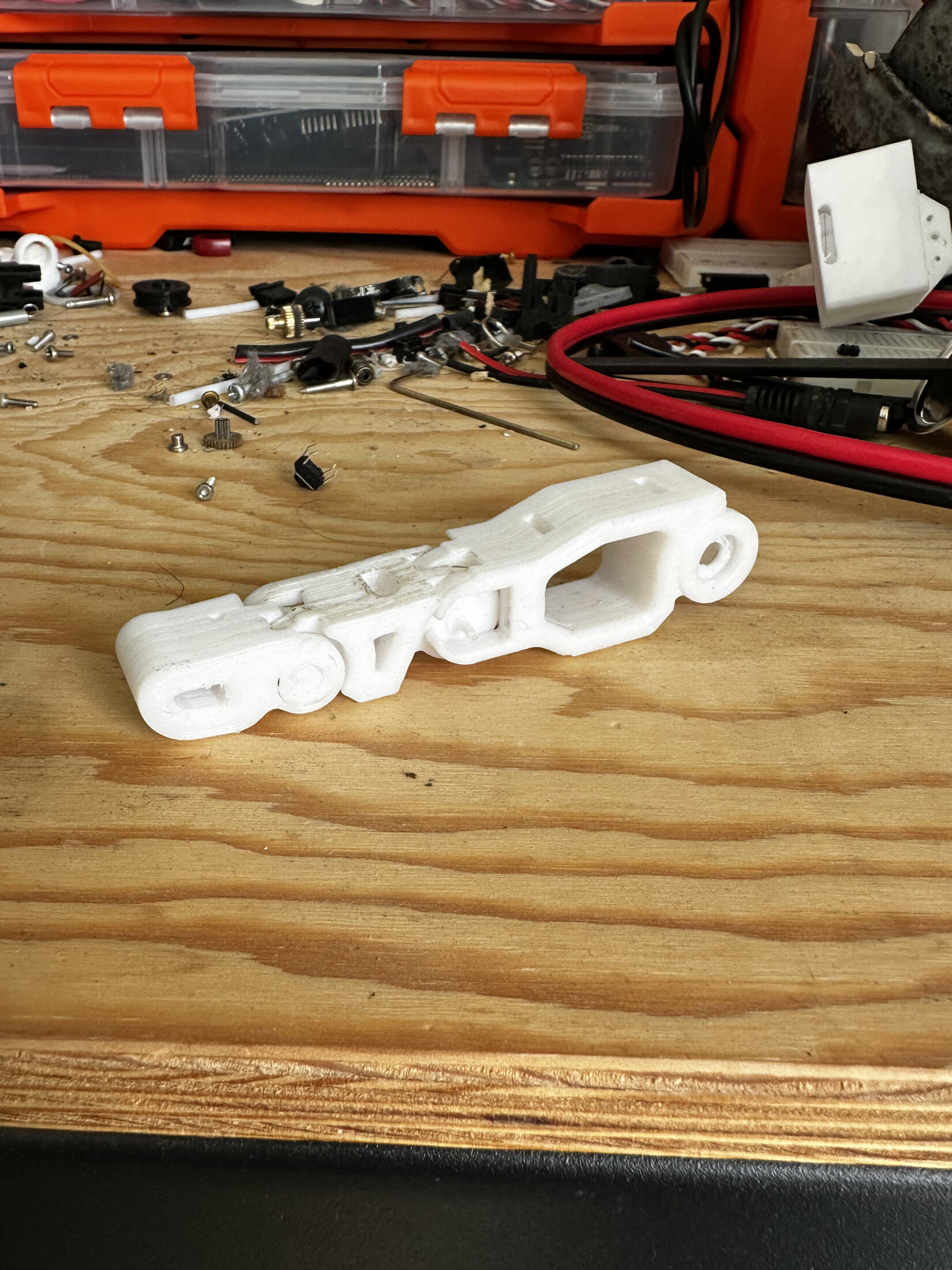
Finger mechanism iterations
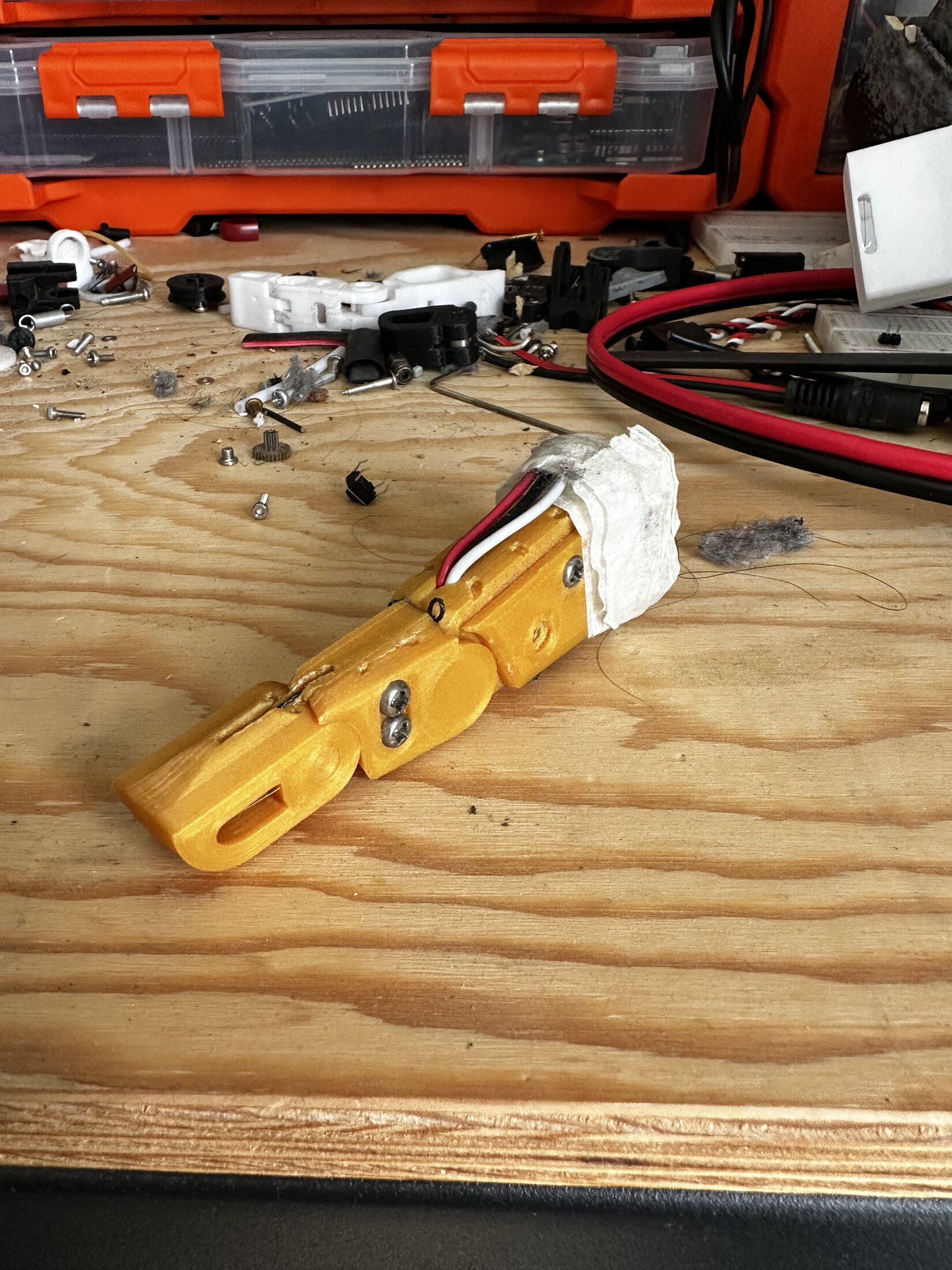
Before building the complete hand, I printed and assembled individual fingers. Each one let me compare a different joint shape or tendon path and work out how I would service it later.
Live control · LEAP Motion
I used a LEAP Motion controller to read my hand and drive the servos in real time. I started with one finger, then tested the full servo set together on the bench before installing it in the hand.
Outcome
I used Robotic Hands as a test platform for fingers, tendons, wrist motion and control, not as one finished object. The mechanics worked well enough to raise the harder questions: how a person should control the hand, and how it could send useful information back. Those questions became Sixth Sense and Hand Tracking.