

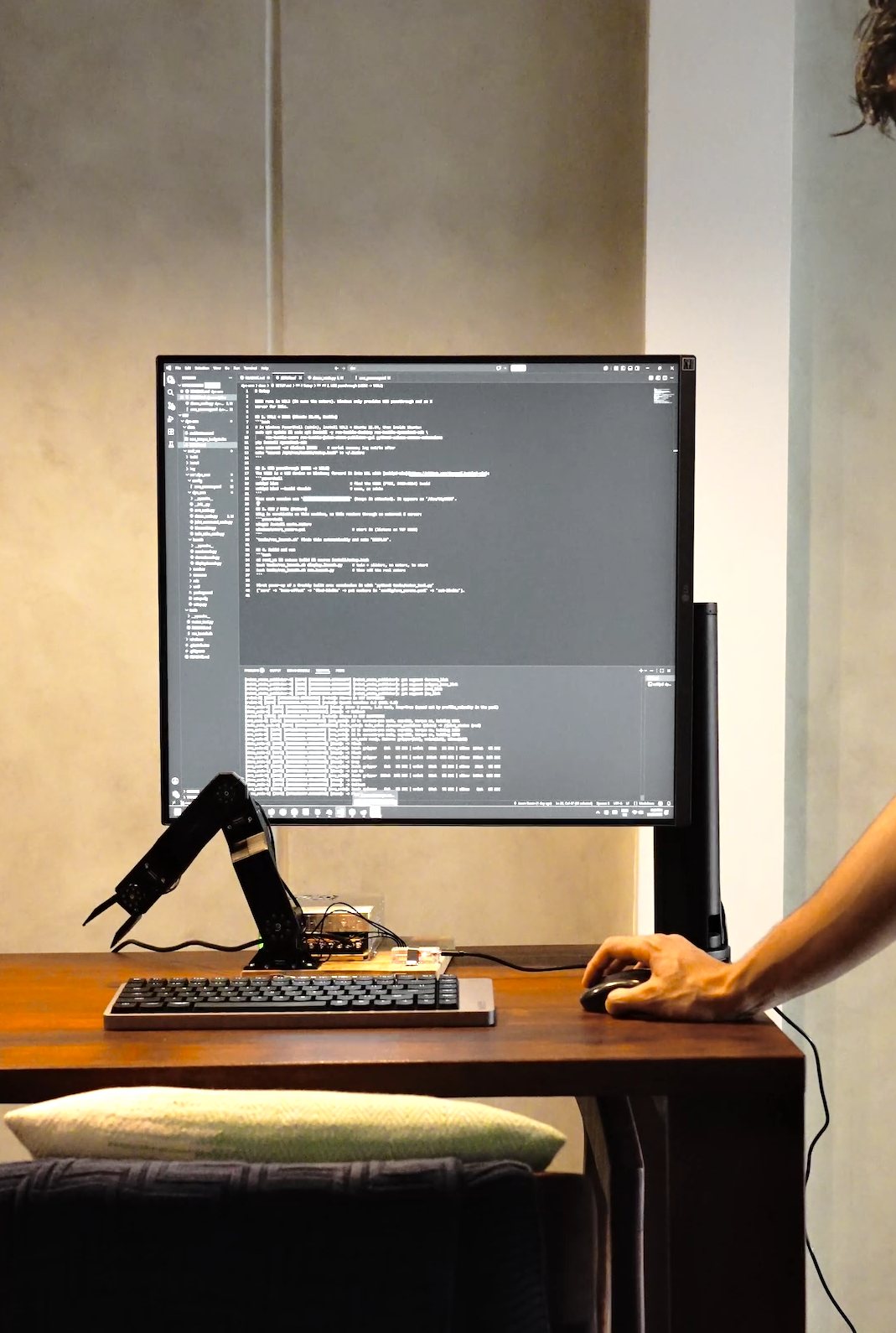
Build the mechanism first
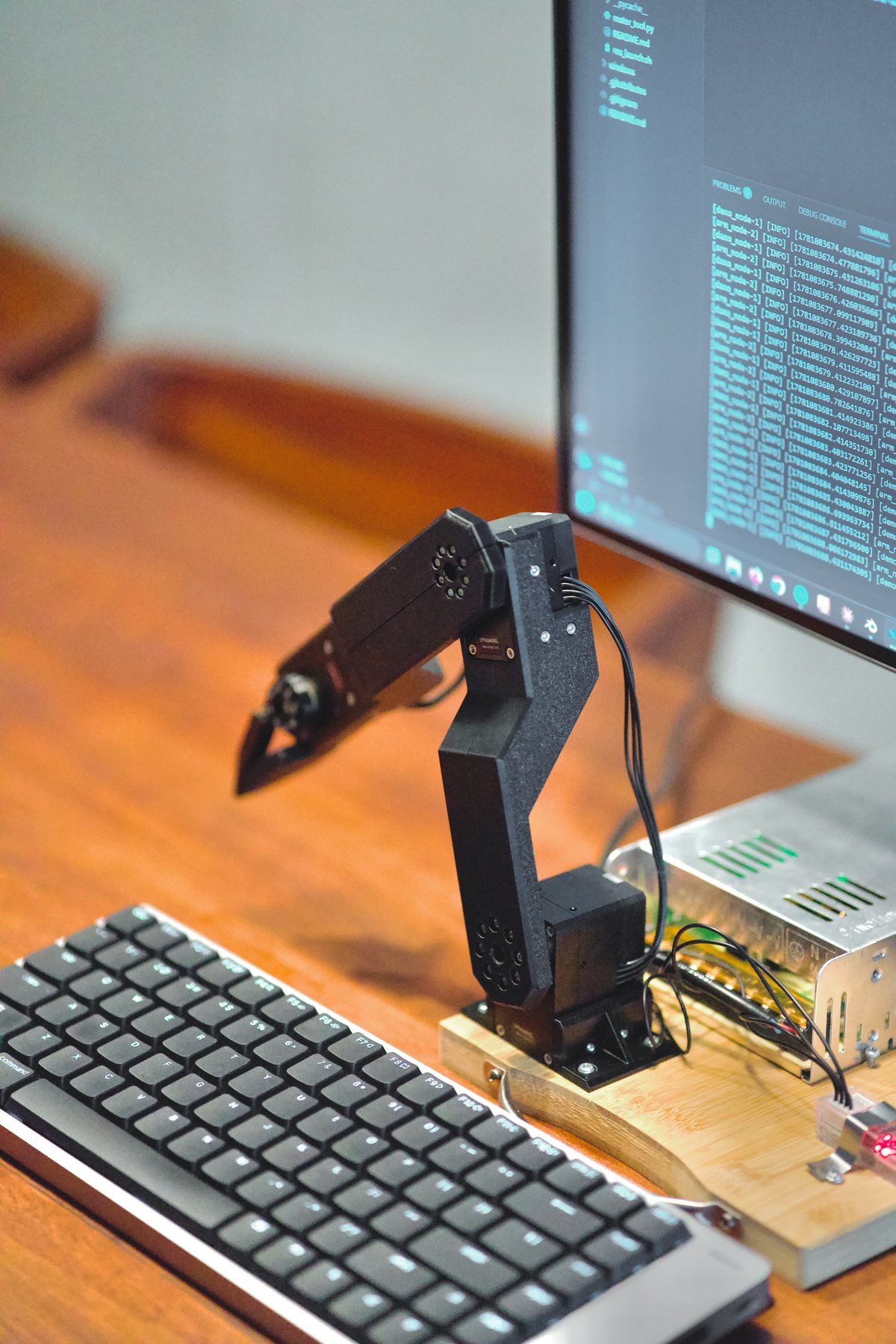
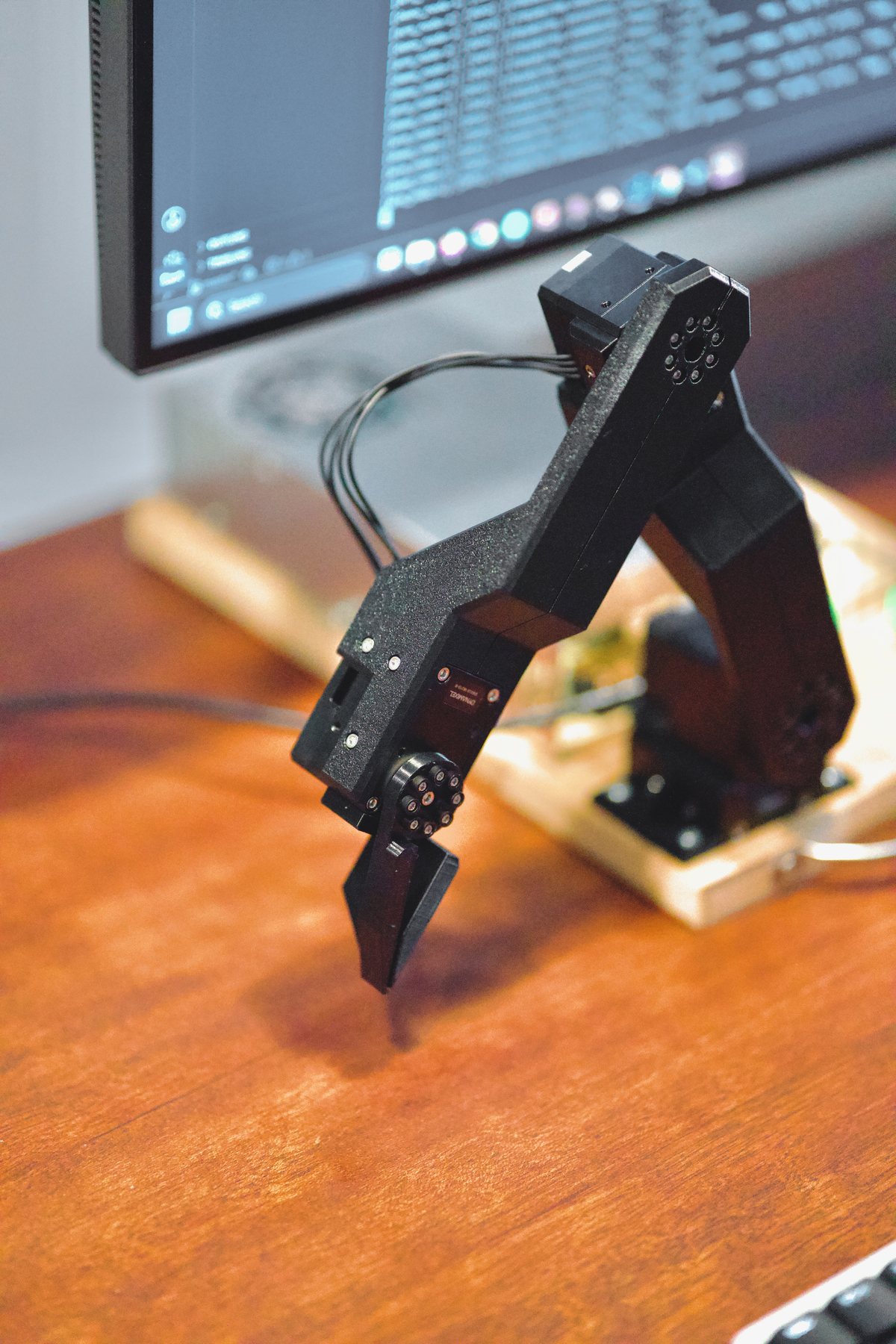
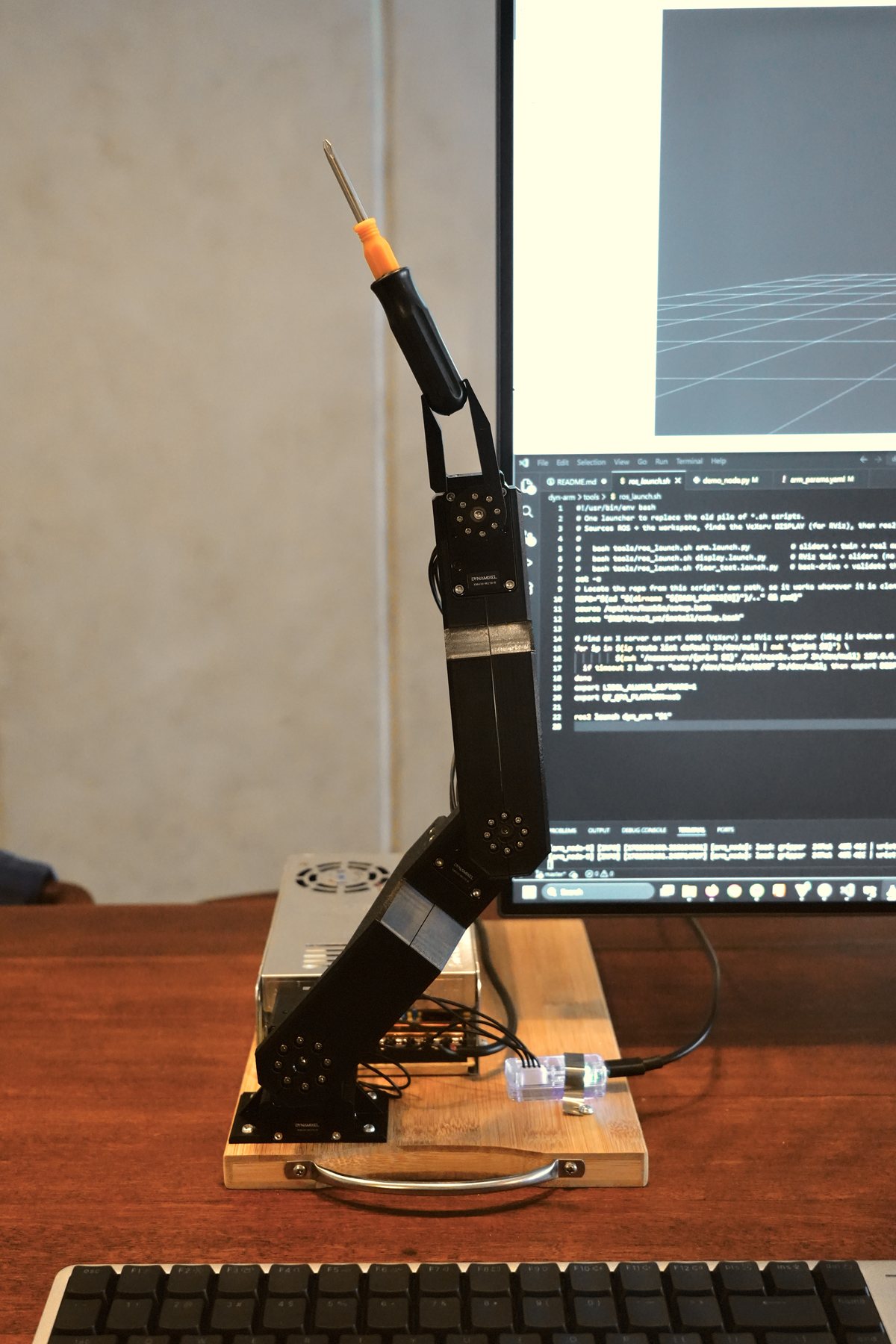
I had a set of Dynamixel XM430-W210 and XM540-W270 actuators on hand and gave myself three days to turn them into a working mechanism. I designed, printed, assembled and tuned the structure against the real hardware. By the end of the third day, I had a compact 2-DOF arm with a working gripper.
Control and safeguards
I added joint limits, torque caps, a virtual floor, an RViz digital twin, and a watchdog that sends the arm home if communication fails. AI generated much of the software scaffold. I defined how the mechanism should behave, then tested and adjusted the code until the real arm moved safely.
Outcome
In three days I turned loose actuators into a working 2-DOF arm with a gripper and basic safeguards, by designing around the hardware I had and testing early. It is a rapid prototype, not a production robot. I plan to build the 5-DOF successor on standby, with greater stiffness, cable management, calibrated payload limits and more deliberate software architecture.