

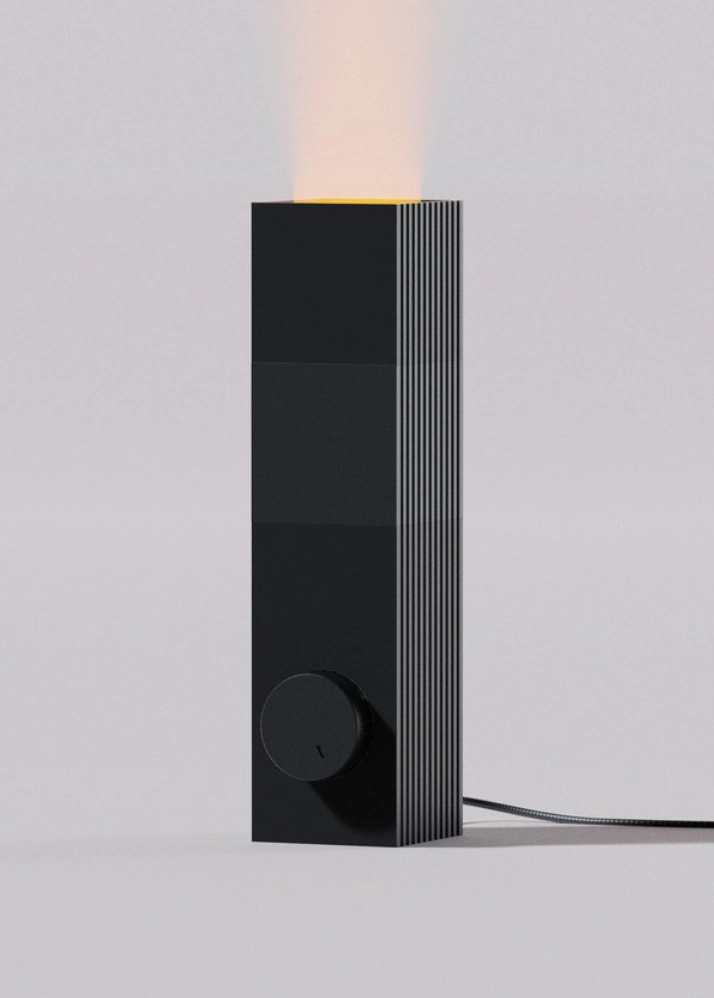
Overview
AVA is named after my sister, whose rental flat had fixed ceiling lights far too harsh for night. Candles bring particulates and fire risk, smart bulbs bring apps, networks and firmware, and a typical 2700K bulb is still not warm enough. I wanted one simple light that helps a room settle at night.
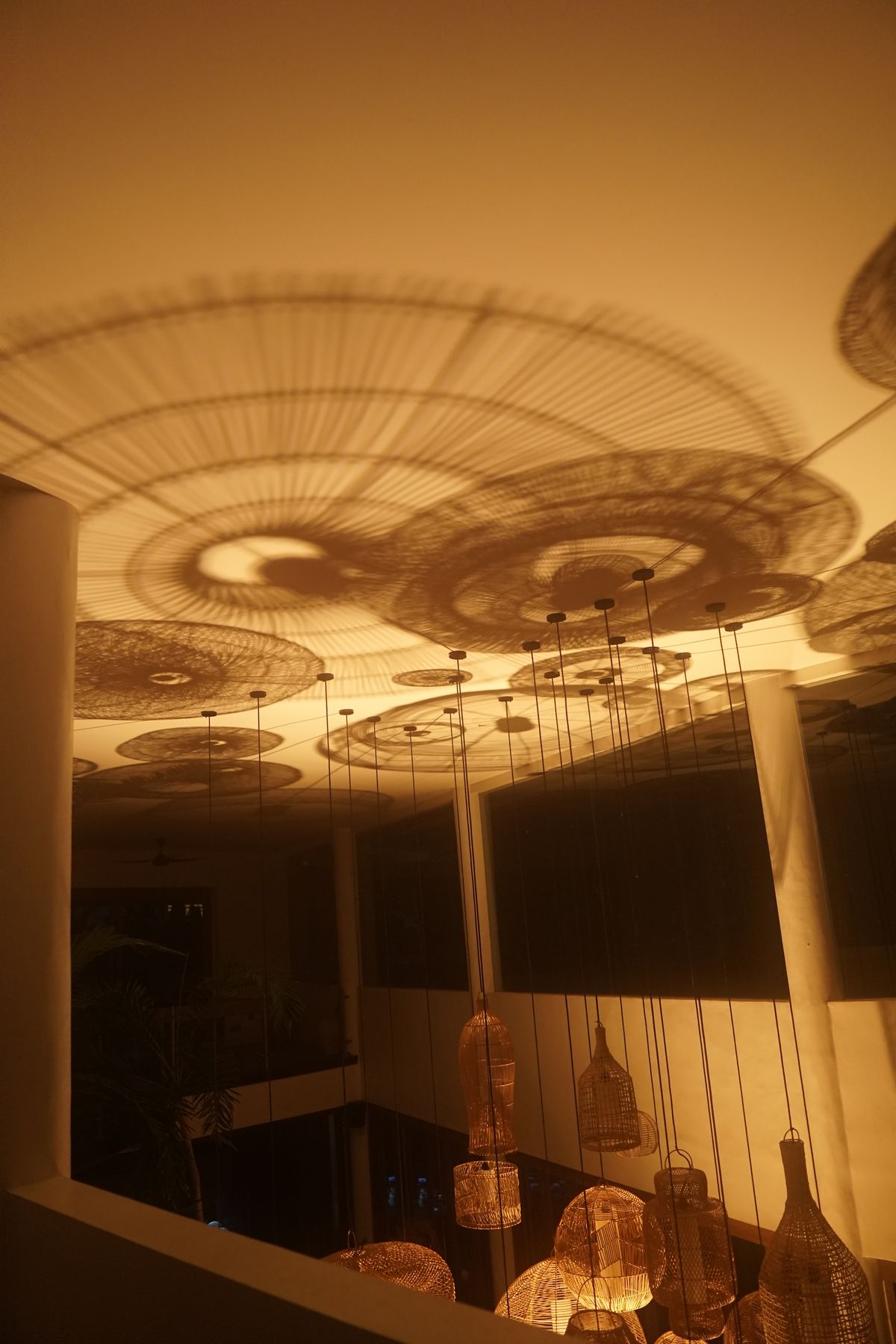
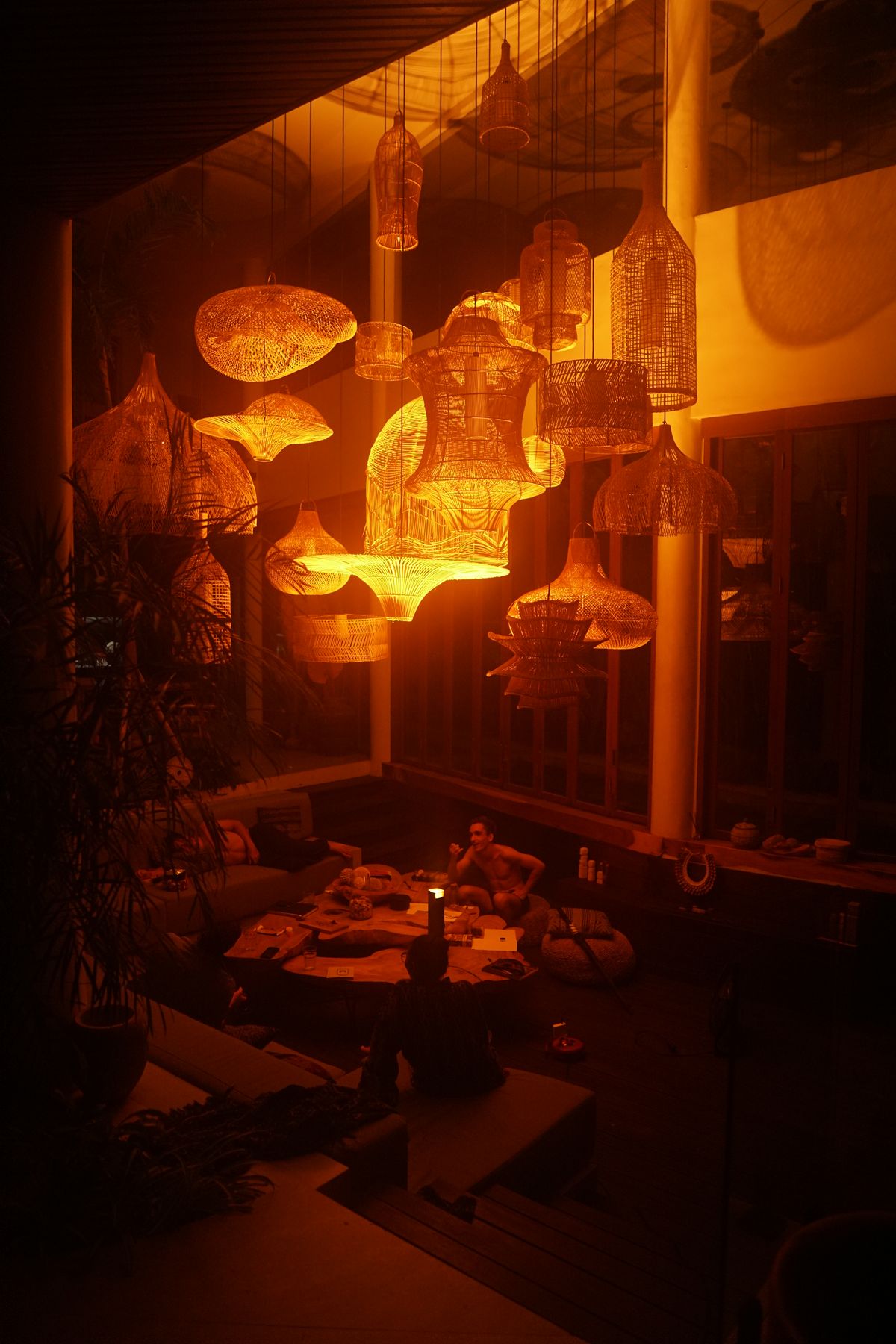
AVA points a fixed 1800K amber LED at the ceiling and uses the whole surface as a diffuser. The LED stays out of view from anywhere around the light, so there is no glare, and the colour holds at 1800K across the full dimming range.
I designed, engineered, manufactured, and sold AVA through my company, OU Group. I hand-assembled the first batch in Melbourne and launched it at A$489.
Visuals
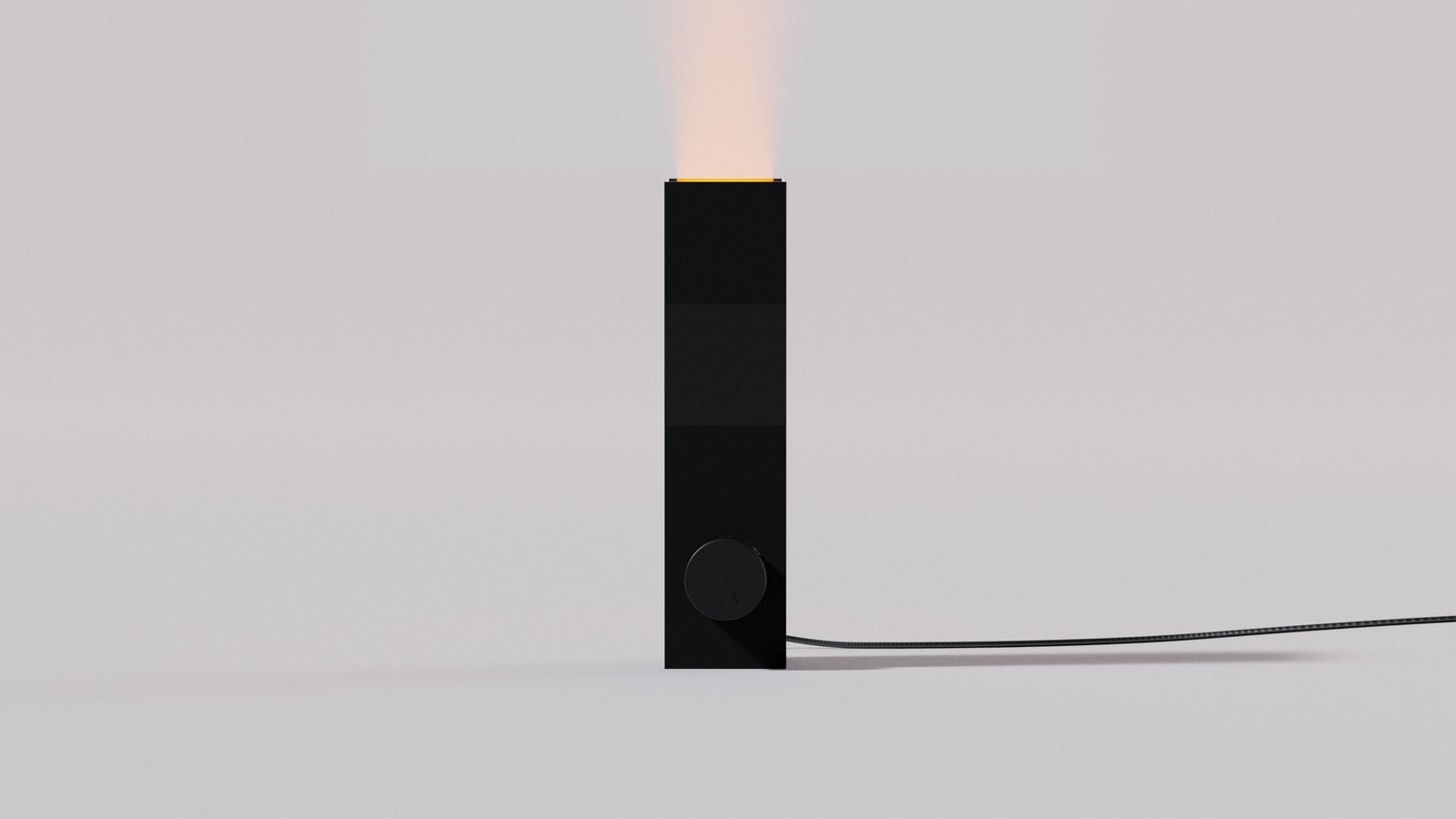
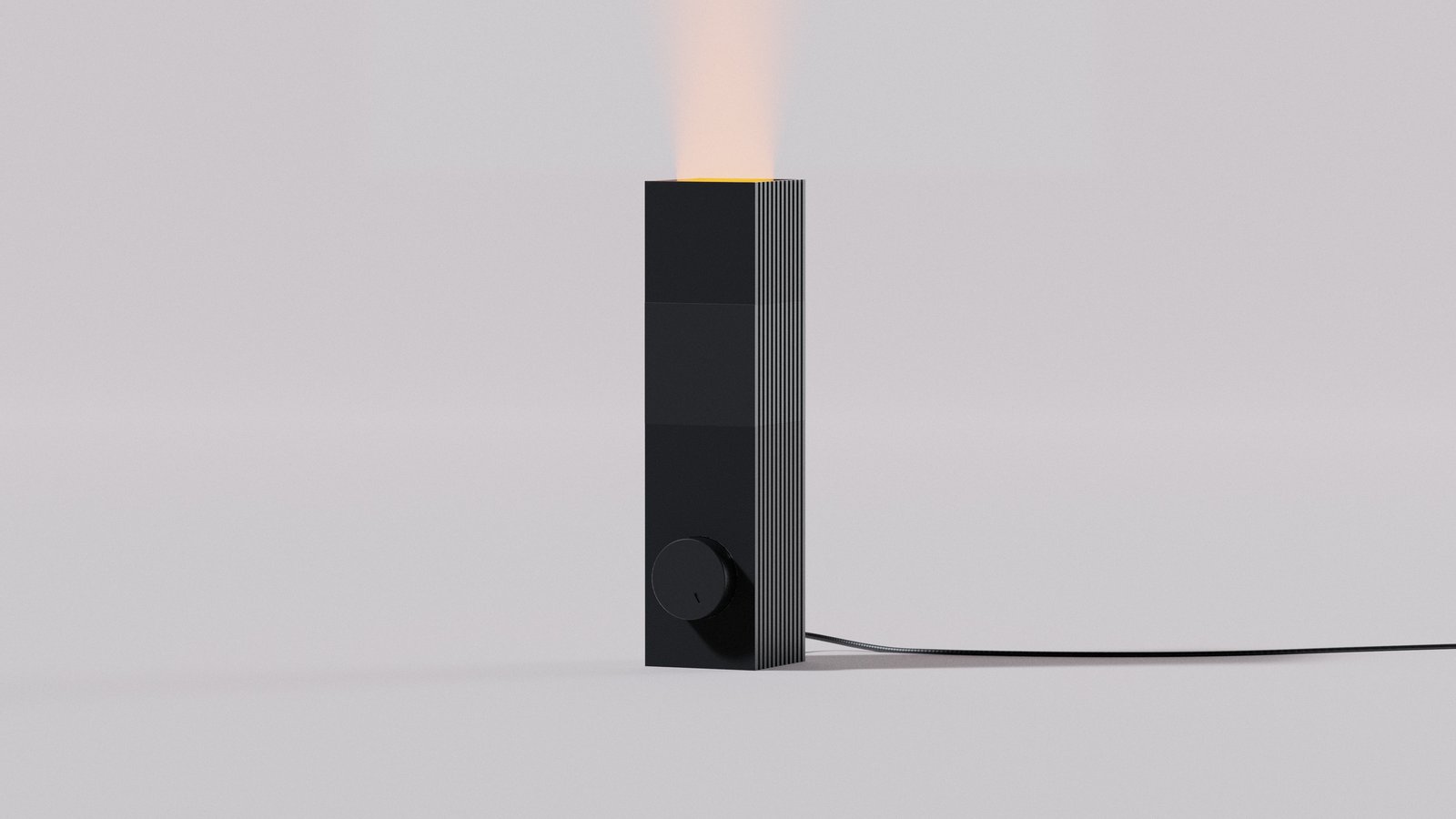
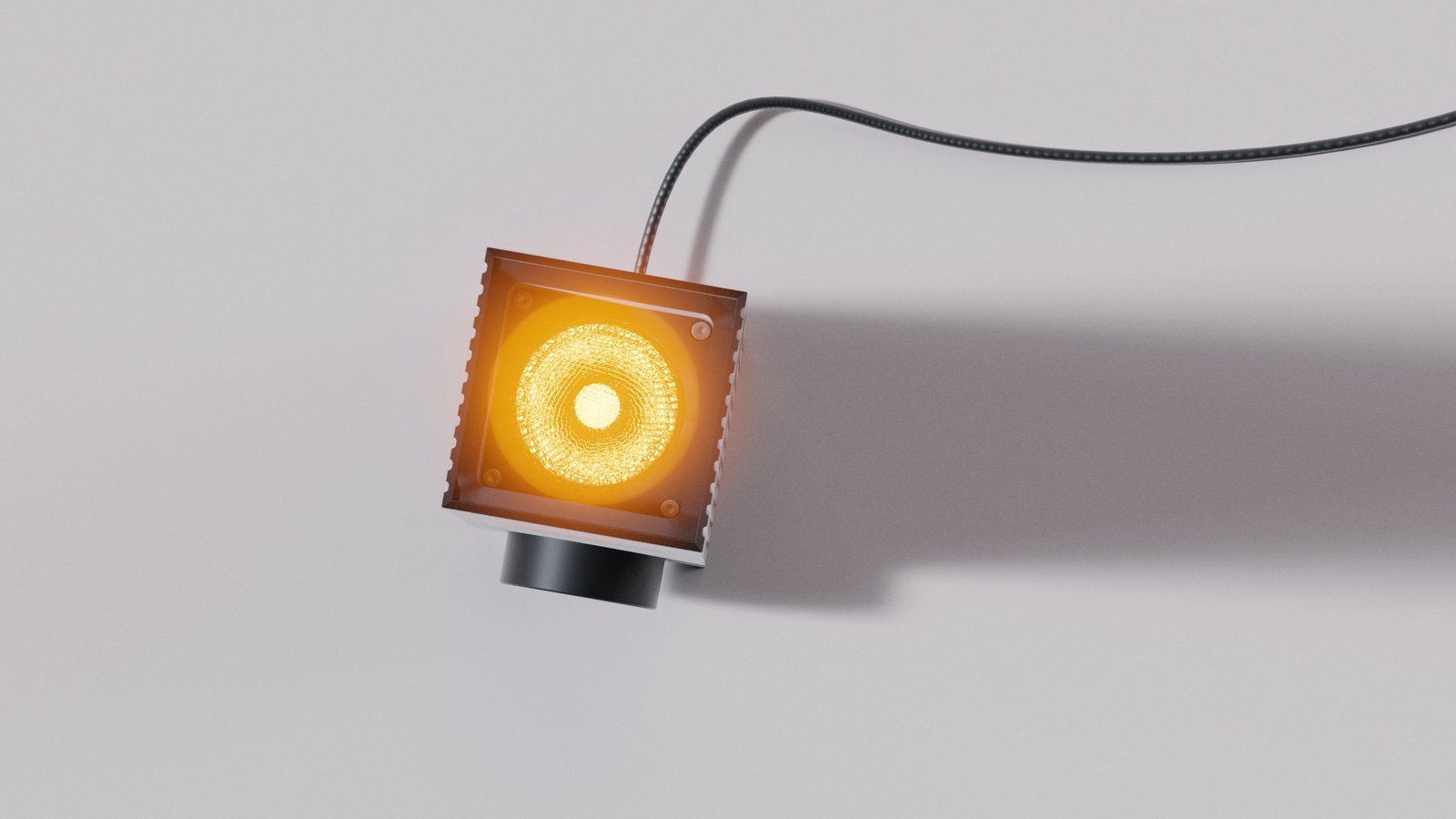
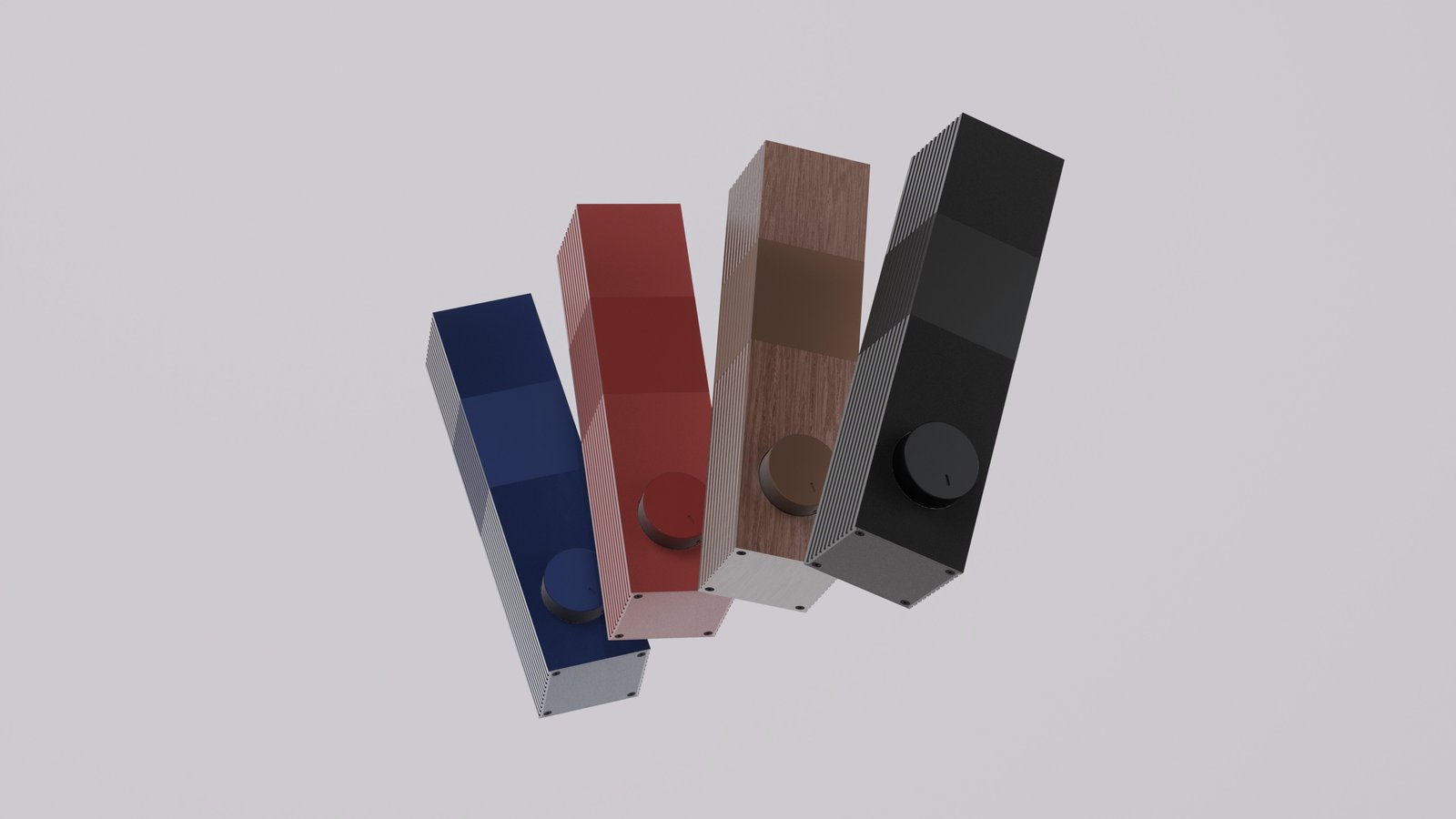
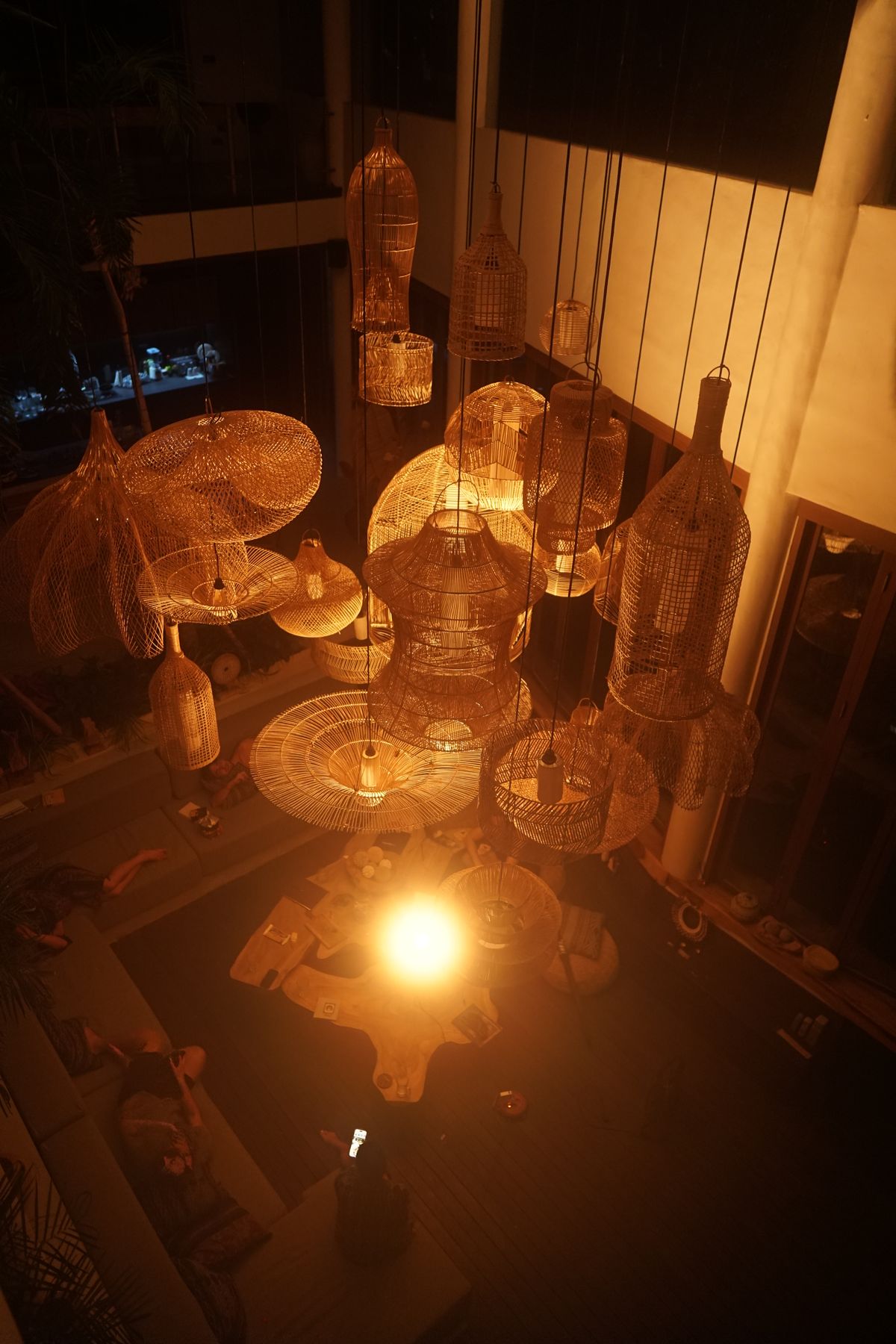
In situ
Electronics & control
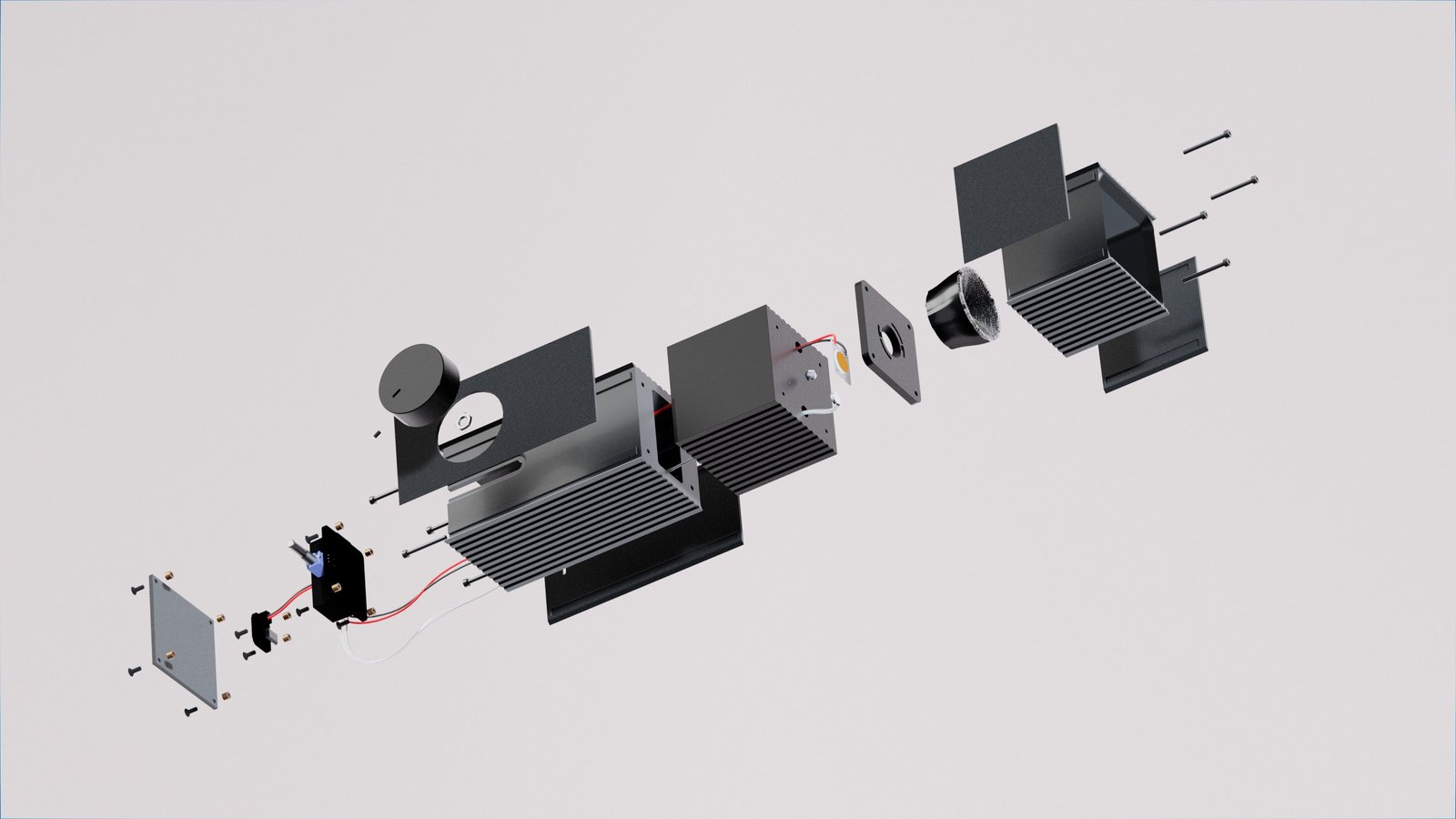
Fully analogue. A 100kΩ potentiometer under a CNC-machined aluminium knob sets the dimming reference for a constant-current LED driver. Power is USB-C PD at 20V through a PD trigger IC, so any 30W+ PD charger works. No microcontroller, PWM, firmware or app, and the output is flicker-free.
Optics & thermal
The LED is a commercial chip-on-board (COB) module, 1800K, 90+ CRI. An off-the-shelf optic shapes the beam to a 60° ceiling wash, sized for a standard 2.4m Australian residential ceiling.
Cooling is entirely passive. I sized the full-height 6061 aluminium heatsink through repeated benchtop tests, then printed the LED mount in carbon-fibre-reinforced high-temperature nylon so it could sit close to the heat source without softening. A bimetallic switch cuts power at 80°C.
Stability testing
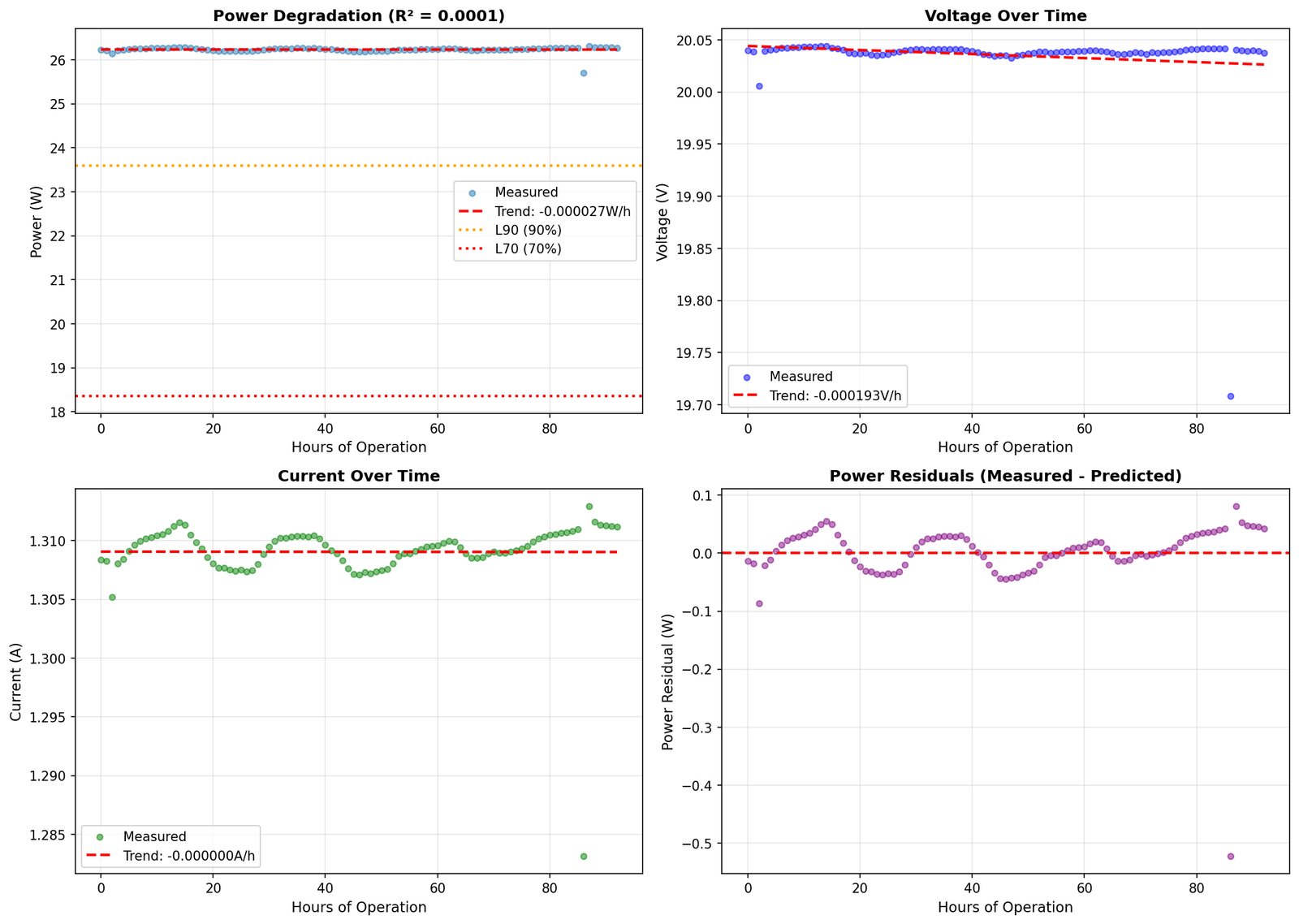
I ran the light at full power for 93 hours. Output stayed stable, with an essentially flat power trend (R² = 0.0001). The small voltage drift was the constant-current driver following the LED's falling forward voltage as it warmed, as I expected. USB-C input current held within 1.305 to 1.310 A while the driver stepped up the voltage to supply the LED at 700mA.
Manufacture
I hand-assembled the first batch in Melbourne. The heatsinks are extruded aluminium and the housing is 3D-printed in-house at first-batch volumes. I designed it for short-run assembly: every fastener takes one hex driver, every wire harness is keyed, and the bill of materials fits on one page.
Bill of materials (excerpt)
Outcome
I owned the whole product: the problem, mechanics, electronics, testing, sourcing, assembly, pricing and sales. I launched it at A$489 with a 10-unit first run, QA-tested every unit, and can assemble and service each one myself. The next version would cut mass and assembly time while keeping the fixed 1800K output, passive cooling and repairable build.